This weekend I'm hope to get my first taste of spring migration. I'll be heading out early in the morning with Marcin, Daria and Arman, a birder from Austin. We'll be seeking out some rarities in Corpus Christi and hunting for warblers, vireos and other songbirds at migrant traps on the mainland and in Port Aransas.
We could get a heaping spoonful of rarities if we can find a Surfbird and a Purple Sandpiper that have been seen the last few days at Packery Channel near the JFK Causeway on North Padre Island. The Surfbird has been easy to approach so it could make for some great photos, but I'd be content just adding this one to my life list, especially since there are only 10 documented records of this species in Texas.
On Saturday evening, we'll head to East Texas for Yellow Rail Walks that will be a lifetime experience. We'll be marching through tall reeds at Anahuac National Wildlife Refuge looking for the elusive Yellow Rail. Thisis basically the only way you can find the tiny, sparrow-sized rail that most often hides out deep in salt marshes. Should be a blast! Stay tuned...
Friday, March 30, 2012


Friday, March 16, 2012
Spring's Feature Presentation: Golden-cheeked Warblers

On Sunday, Marcin, Daria and I found at least 2 warblers on the Water Trail at Friedrich around 3 p.m. We first heard the distinct call while sitting near the windmill and eventually found a beautiful male moving about the cedars.
Now it's important to not get the Golden-cheeks confused with a similar looking species, the Black-throated Green Warbler. If you've never seen a Golden-cheeked, be sure to study the difference. Note the definite black line and bright yellow/gold in the face. Also, Black-throated Green males have green on the back. The well-defined facial pattern and green back will help you make an accurate ID.
It's always exciting when the Golden-cheeked Warblers show up because birders are reminded that spring migration is under way and soon mixed flocks of Yellow-throated, Blackburnian and Cerulean warblers will be showing up at migrant traps throughout Texas.
Late March - early May is the best time to find these highly desired birds. If you plan to be in Port Aransas or anywhere near the coast during these next few months, you definitely need to check out migrant traps like the Birding Center and Paradise Pond. I'll probably be highlighting some of them in an upcoming blog entry. These areas are especially active whenever there's a weather event that causes a lot of these migrating species to take shelter at these migrant traps. This highly sought after event is known to birders as a fallout!
If you live in San Antonio, I highly recommend Warbler Woods near Schertz, TX. I plan to be a frequent visitor over the next few months.
 |
| Bluebonnets from 2011 at Warbler Woods |
Spring migration is primetime for birders because rare birds can show up just about anywhere. So keep a lookout over the next few months, especially in your own back yard. Who knows? You may soon be hosting the next biggest rare bird in Texas.
Saturday, March 10, 2012
Rare Flycatcher, Glaucous Gull Among Lifers Found in Valley

Last weekend, Grana and I had a great time picking up some lifers and rare birds in the valley. The main highlight for me was finding the female Rose-throated Becard at Estero Llano Grande State Park. The secretive flycatcher is easy to miss since it's quiet and sneaks around the dense brush of the park's Tropical Zone. I spoke to some birders who had been there for 3 weeks and had still not seen the becard. They admitted they hadn't been trying very hard, but I had heard other stories of birders missing this rare flycatcher. When I tried to find the flycatcher on my first trip, there was no sign of the becard even though the park staff had seen it the day before.
I searched the large Tropical Zone for about an hour and was about to give up and move on to the next birding spot. But I decided to check in with the birders who had been around for 3 weeks.On my way to the feeding station and water drip where I had left them, I passed by a large tree that overshadowed an old house. Knowing the bird was usually seen high in tree canopies, I looked toward the top of the tree and lo and behold, I saw a cinnamon-backed bird with a long tail and dark face.
 |
| Rose-throated Becard |
Grana and I spent a lot of time at the Brownsville Landfill. Among some of the birds we saw at the landfill included Chihuahan Raven, White-tailed hawk and thousands and thousand of gulls.

On the first day, we didn't find any rare gulls, but we did find a lone Peregrine Falcon.

 |
| Lesser Black-backed Gull (Right) Herring Gull (Left) |

Our last day in the valley, we woke up early to search for Red-crowned Parrots. I have been to the valley on two other occassions since I got back into birding three years ago, but I have never been able to find the parrots. Grana used to frequently visit the valley, but it was just one of the birds she never was able to find.
Before our trip, I got some good tips from a rare bird alert Web site, narba.org. The parrots aren't rare, but they are sometimes difficult to find if you don't know where they roost.

We searched an RV park in San Benito where the parrots were known to roost. After about 5 minutes of searching, I heard the loud spwaking of the parrots and found the group on a utility line. We watched the parrots for several minutes and saw a Black-bellied Whistling Duck join in on the action.

The parrots were fun to watch as they flew around the neighborhood and allowed close approach.
We ended our time in the valley with a trip to Boca Chica beach, a remote beach south of South Padre Island.
 |
| A Great Blue Heron rests on the jetty at Boca Chica Beach with South Padre Island in background. |
Although we didn't find any other lifers, we got some good looks at more common birds like the Harris Hawk.

All together, it was another great time in the valley. Hopefully, I'll get another chance this year to visit to find some South Texas specialities I want to find. Here are some other photos from our trip.
 |
| Curve-billed Thrasher |
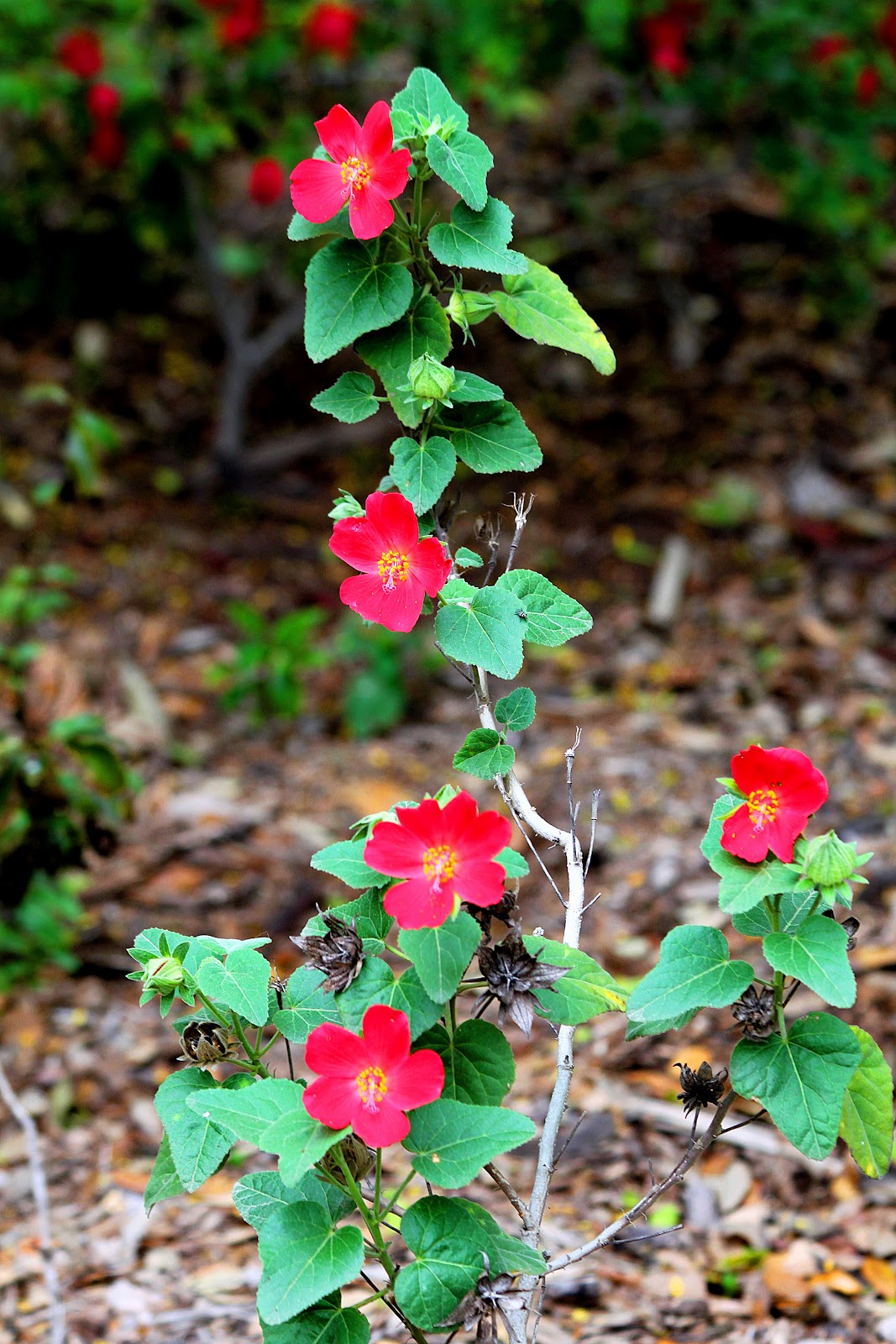 |
| Any of you gardeners know what this is? |
 |
| Northern Beardless-Tyrannulet |
Wednesday, March 7, 2012
Trip to Valley a Success
 |
| Glaucous Gull - Brownsville Landfill |
Friday, March 2, 2012
Another Trip to the Valley
This weekend I'm taking another trip to the Rio Grande Valley, except this time I'm taking my 84-year-old grandmother along for the ride. She's the one that got me into birding as a kid. She's taken me on lots of trips growing up. Now it's my turn. So I've planned out our route and we'll be leaving for a 3-day weekend in the valley around 6 a.m.
I'm determined to get another crack at finding the Rose-throated Becard, which I missed on my last trip. I also want to get some other resident birds I missed last time and get better pictures of the Golden-crowned Warbler. We both hope to find a Glaucous Gull at the Brownsville Landfill. Yes, the city dump... Landfills are a great place to find rare gulls that are known to winter in Texas. This landfill is also the only site where the rare Tamaulipas Crow once spent its winters. In fact, a few years ago, it was the only place in the U.S. where birders could get the crow for their U.S. list. We don't expect to find the crow since they haven't been seen for a while, but when you're birding, you never know.
Lots of good stuff coming your way, so stay tuned...
Wednesday, February 22, 2012
Snowy Owl Creating Quite a Buzz in DFW
The Snowy Owl has made headlines over the last few days in the DFW area. Non-birders who saw the news coverage over the weekend went to see the Harry Potter-like owl.
The sighting is only the 6th record in Texas, thanks to a Dallas police officer who first spotted the rare tundra visitor. Thankfully, the officer is a bird watcher who recognized the bird right away and made an effort to get the word out to birders. (you can read the story here). If it wasn't for him, it could have been missed entirely. According to some birders, a security guard of Robertson Park had seen the owl for several weeks, but didn't recognize its importance.
Non-birders seeing the news coverage of the owl claim they saw an owl like this before in the last few years, but were unable to find the right source to report it. Who knows how many Snowy Owls have been in the area over the last 50 years, but never got reported. There's probably owls out there right now going unnoticed.
So far the owl hasn't been seen in the last two days. When it was first reported last week, it disappeared several days before being seen again last Thursday. It will be interesting to see if it shows up again.
I'd love to think of a way to make it easier for people who don't know much about birds to share their sightings so birders and non-birders alike can enjoy the experience of seeing something rare and beautiful like a Snowy Owl.
Tuesday, February 21, 2012
Search for Lone Star Snowy Owl a Success

On Sunday, Marcin, Daria and I left San Antonio around 4:30 a.m. and headed toward Robertson Park in Rockwall, TX. The trip took about 5 hours. We dreaded the drive back since it was just a day trip. But when you want to see an unpredictable creature of the wild tundra hundreds of miles out of its context, it's worth the trip.
When we got to the marina, we saw a host of birders and photographers all gathered in the parking lot near a utility pole where it was seen the previous day. There was no sign of the juvenile female Snowy Owl. We waited for about an hour when suddenly, Marcin called out, "There it is!" as he pointed to a pale, shadowy figure perched on a sailboat mast.
The owl got the same treatment as a female pop star taking the stage in front of crazed fans. But instead of loud applause and cheers, there was a chorus of camera shutters. She didn't seem to mind and flew farther into the spotlight, literally. She landed on a light post with its back facing the crowd of birders rushing into position to get some prized Snowy shots.

 Me and a few birders tried our luck on a small extension bridge to the docks that led to a locked gate. A few boat enthusiasts saw us pressing up against the gate and were kind enough to invite us through the gate to get a closer look at the owl. It was like getting backstage passes to a favorite show.

While we got a closer look and snapped photos, the owl went about its business, resting and preening.
She was so comfortable on the light post that she stayed there all day. We left after about 2 hours of looking at the owl and went to Lake Tawakoni State Park to find some additional species. Some of the highlights included White-breasted Nuthatch, Brown Creepers, Eastern Towhee and a flock of Smith's Longspurs. (A difficult species to find.)
After a nice afternoon of birding, we dropped by the park again to get one last look at the owl.

 |
| Marcin and Daria Kojtka |
Subscribe to:
Posts (Atom)